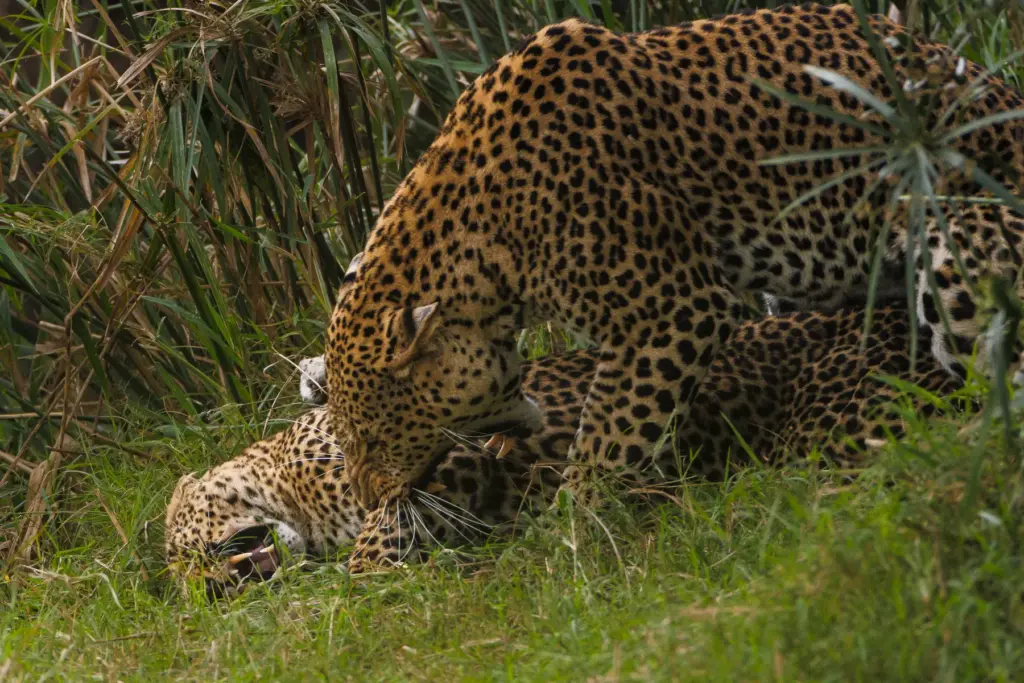
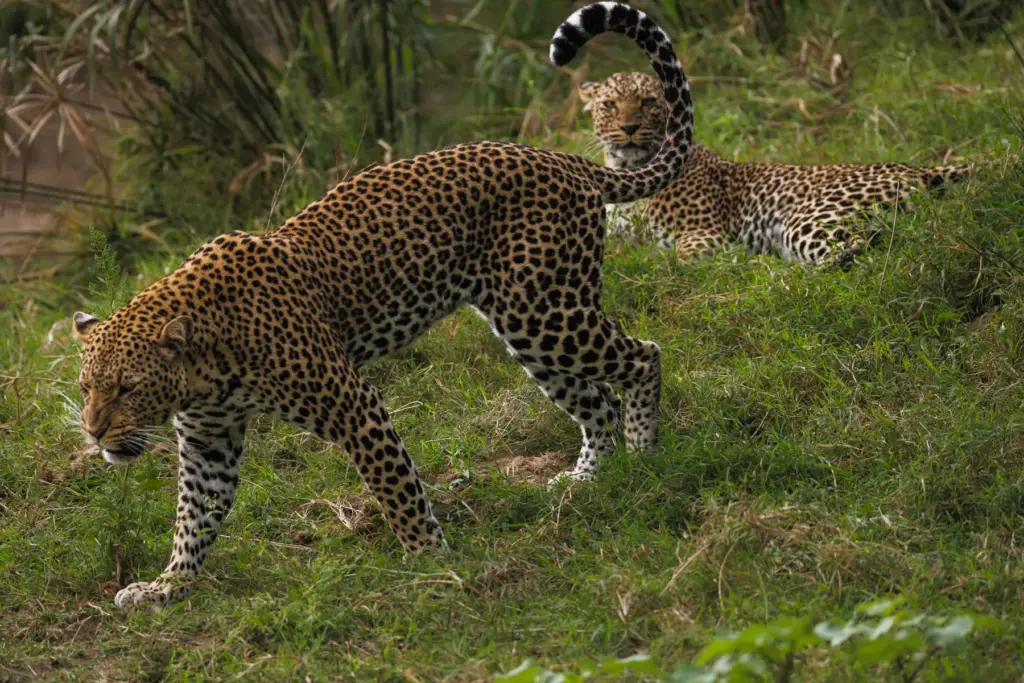
There are safaris that reward your eyes and then there are safaris that awaken every other sense. We often think of wildlife experiences as purely visual pursuits. We scour the horizon with binoculars, scan tree branches for a twitch of movement, and dissect every shadow in the hope that it might reveal an animal. But every so often, nature reminds us that seeing is only one way of experiencing the wild.
This was one of those days.
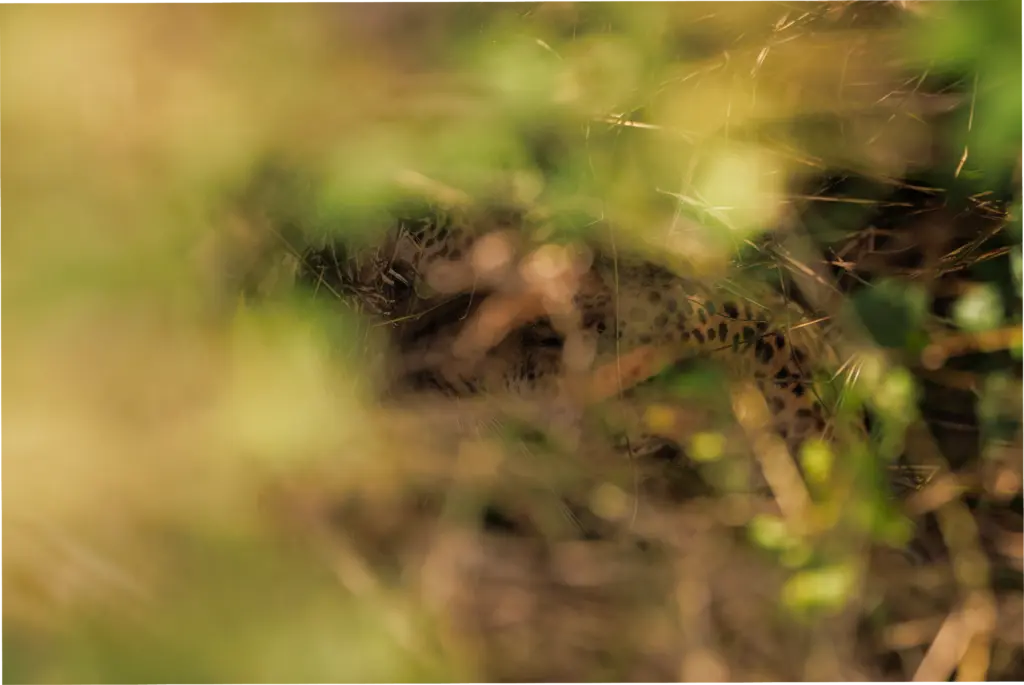
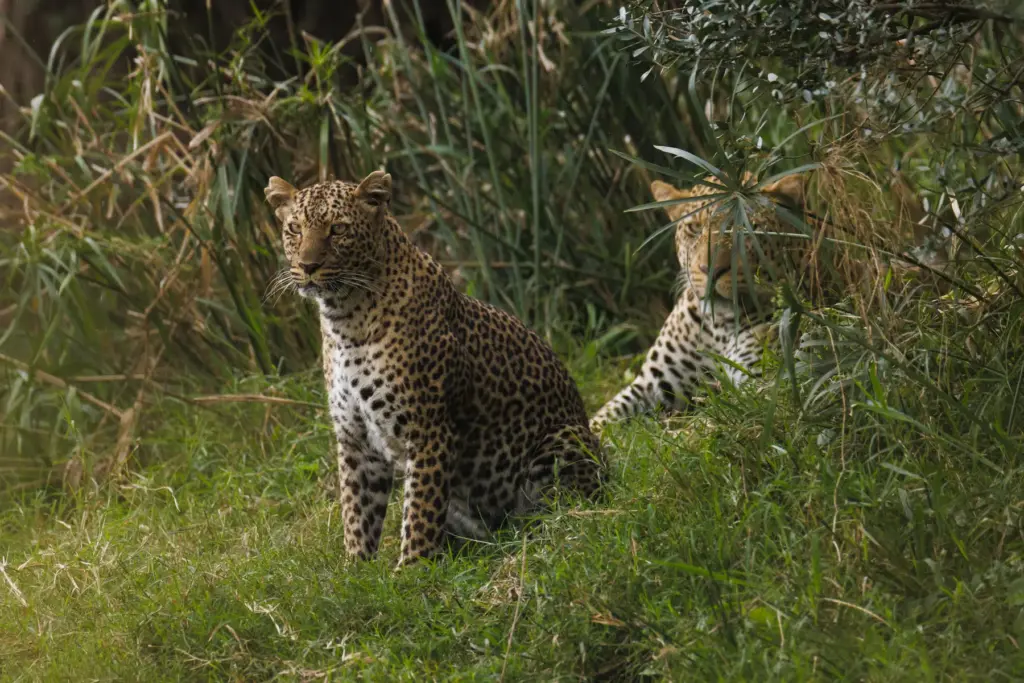
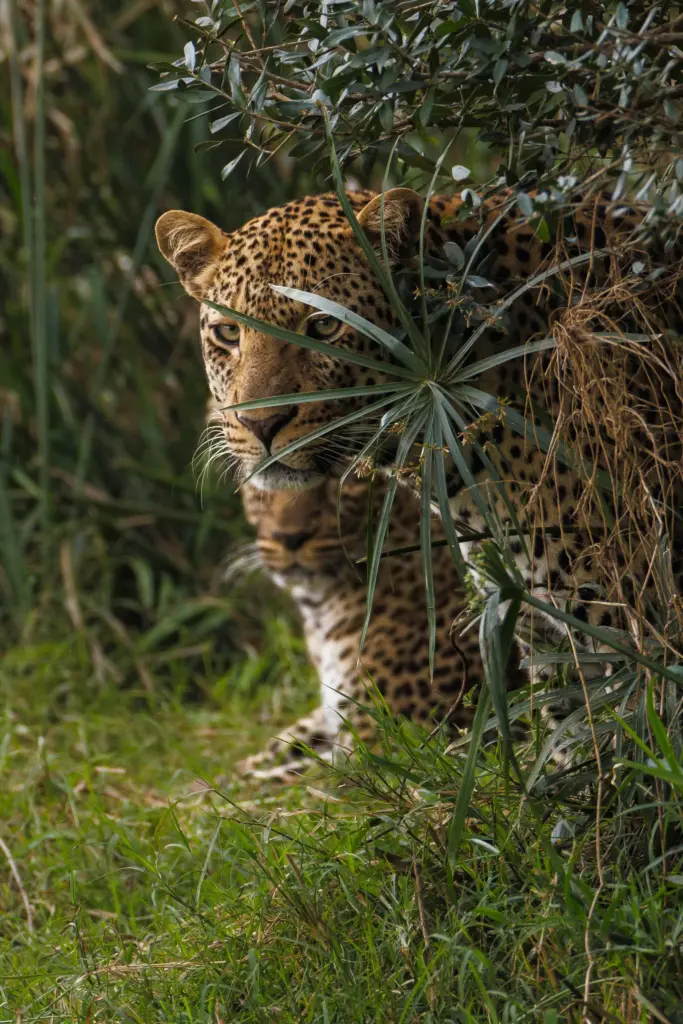
After a morning spent watching wildebeest crossing into the Mara, we slipped into the dense forest surrounding Ishara, searching for a pair of mating leopards. In a labyrinth of orange-leaf crotons, fallen leaves, tangled branches, and shifting light, their rosetted coats vanish completely. Their camouflage is so flawless that even when they’re only metres away, your eyes simply refuse to find them.
Minute after minute, we searched. Nothing.
As hunger set in, we decided to switch off the engine, unpack our lunch boxes, and simply be still. We sat in silence. No idling engines. No conversations. Just the raw hum of the forest. Every rustle, every bird call, every distant snap of a twig suddenly mattered. We listened with fierce intention, trying to separate the sounds of the forest from the one specific frequency we hoped to hear.
A few minutes later, another of our guides, who was scanning a different sector of the forest with his guests, radioed to ask if we’d seen or heard anything. Before any of us could answer, our guide Kyle raised a hand and whispered, “Listen!”
He has a mysterious way of conjuring leopards even when they seem non-existent. Earlier that morning, he had climbed a giant fig tree overlooking the savanna, joking that if he couldn’t find one, he would become one.
Then, it happened.
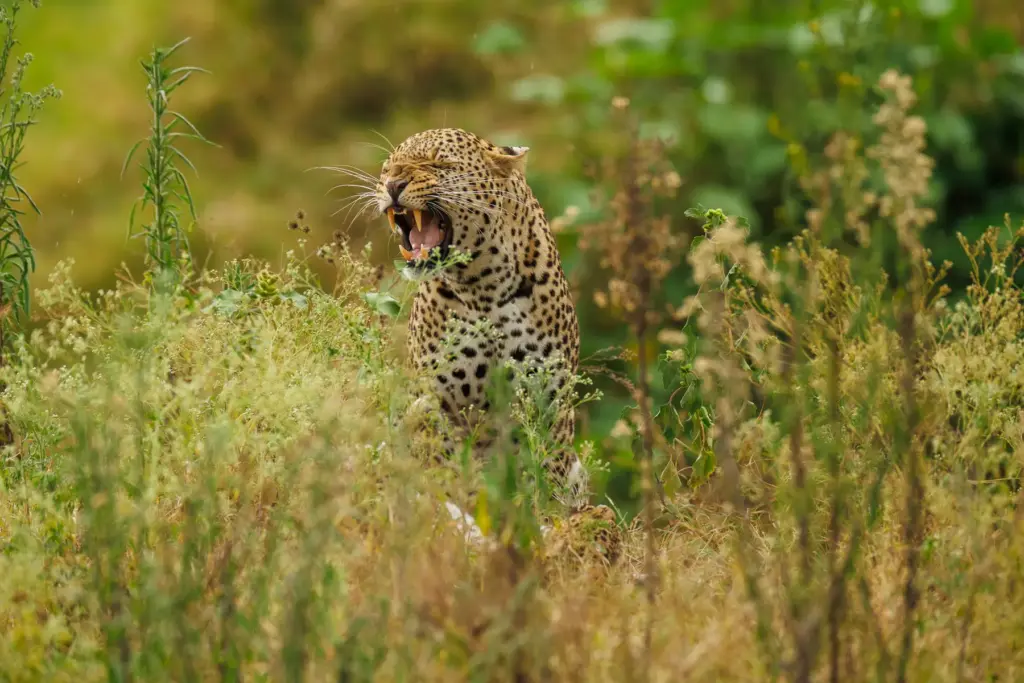
A deep, unmistakable growl sawed through the damp forest air. Every head snapped in exactly the same direction. We knew precisely where it had come from.
Lunch was instantly forgotten and within moments, we were tracking toward the sound. As we closed the distance, all I caught was the flick of a tail before both leopards melted into a steep ditch—hidden once again by the very landscape that protects them so perfectly.
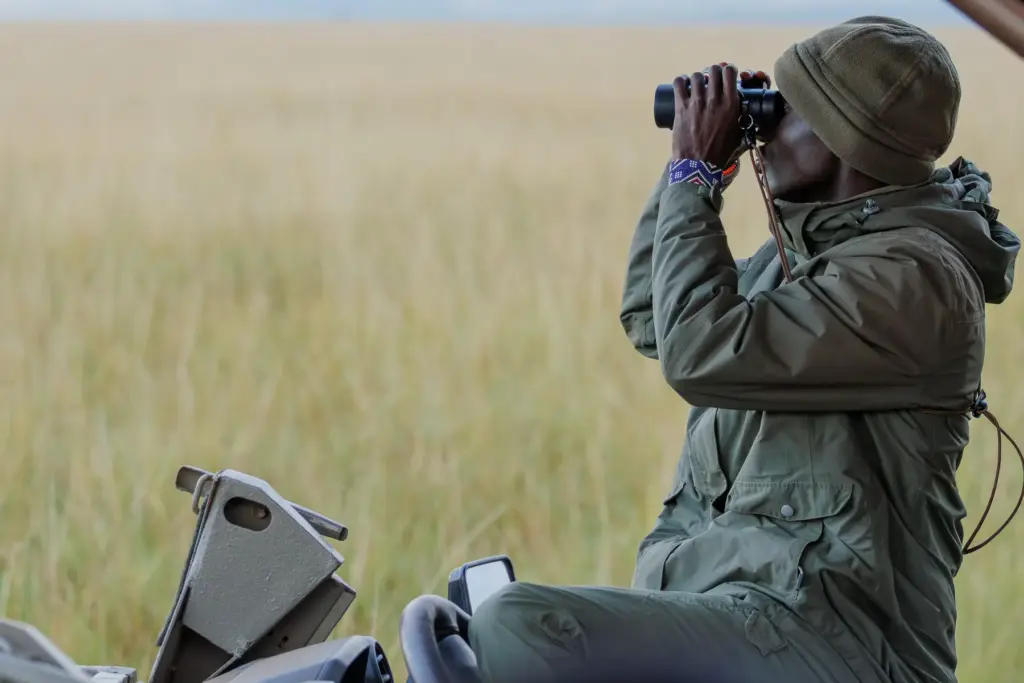
Most people would have thought the sighting was over. In reality, it had only just begun. For nearly an hour, we barely saw them. Instead, we experienced what I can only describe as an acoustic safari.
Again and again, the forest erupted with the guttural sounds of the pair mating.
Deep, rasping growls echoed through the bush for a few seconds, followed by silence. It happened five times while we sat there, hidden from view yet completely submerging us in their world.
It was one of the most extraordinary wildlife encounters I’ve ever experienced. Without seeing them, we could feel the raw intensity of the moment. Every growl painted a vivid picture that our eyes couldn’t see; every pause stretched our curiosity further. It reminded us that the wild isn’t experienced through sight alone. It is heard. It is felt. It is smelled. Sometimes, it is even tasted in the coarse dust that hangs in the air after driving through the bush.
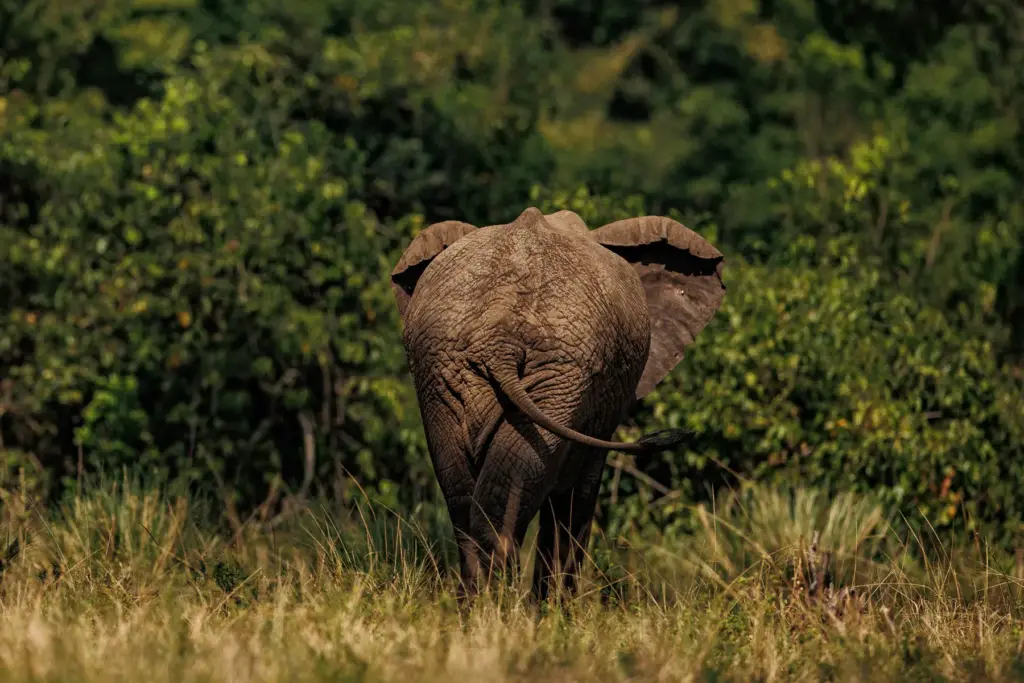
Eventually, the forest fell quiet. Then, a herd of elephants wandered by, grazing. The sound of cracking branches and heavy, thudding footsteps filled the air. We thought their presence might flush the leopards out into the open, but the thicket held its secret.
The leopards rested. We waited.
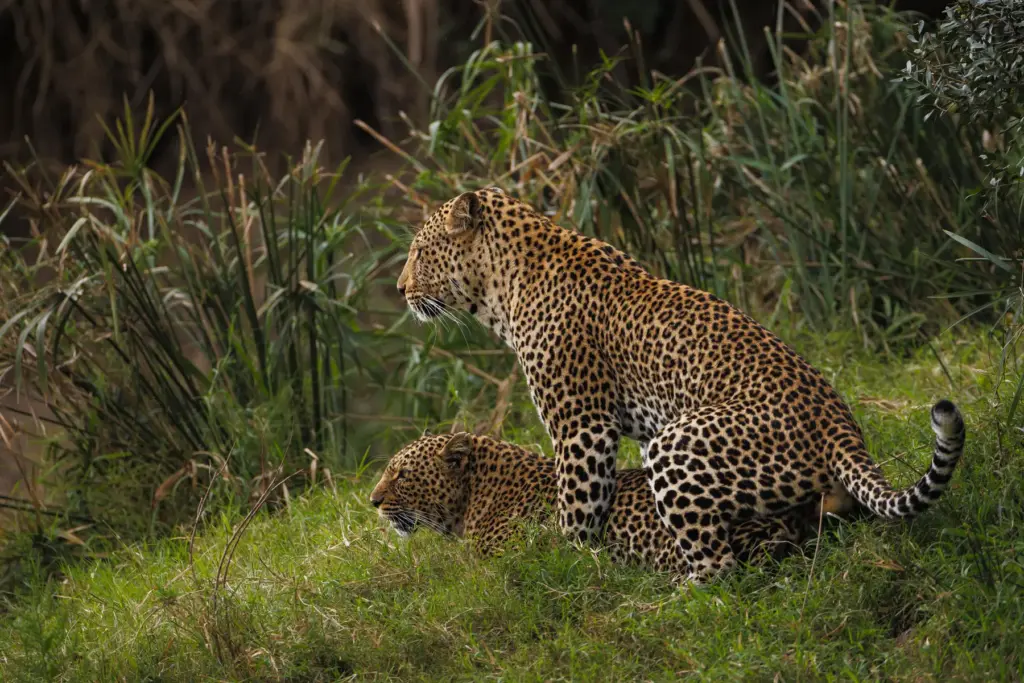
Then, almost as if they had decided the show wasn’t quite over, they mated once more before gracefully walking out onto the other side toward the river. We drove around and positioned ourselves on the riverbank alongside our other vehicle, which had been patiently waiting there all along.
And there they were. Glorious. Majestic. As the rain began to fall and elephants grazed around us, we could finally see them. We sat in stunned, silent disbelief.
After an hour of listening, witnessing them in the open felt surreal. Their rosetted coats practically glowed against the dark forest floor, every movement carrying the effortless, lethal elegance that makes leopards one of Africa’s most captivating predators.
They continued mating several more times in the open—a spectacle that is rarely, if ever, witnessed.
The visual safari had finally arrived. But by then, a deeper truth had taken hold. The real climax of the safari hadn’t been delivered to our eyes; it had been etched into our senses long before we ever saw them. In the end, the wild’s most unforgettable moments aren’t always the ones we capture and frame. They are the ones that capture us—the ones that settle into our bones, whispering to us long after the dust has cooled and we’ve gone home.
Photo credits: Japheth Supeyo, Joseph Njenga, Ian Wesanza